Two-Factor Authentication Checklist for Your Most Important Accounts
A practical, account-by-account checklist for adding two-factor authentication, storing backup codes...

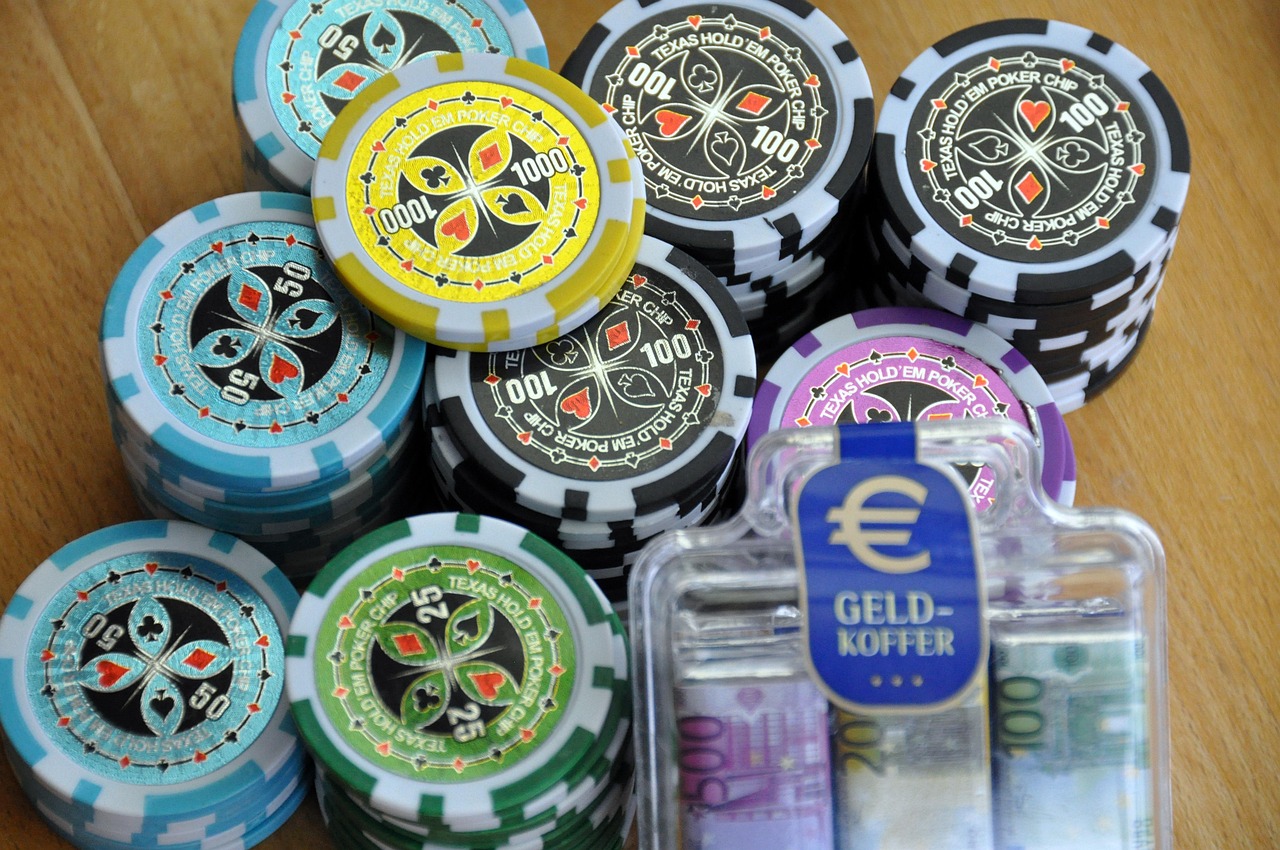
Every slot machine in Las Vegas is legally required to display a little sticker that says something like "RTP: 92.5%." Almost nobody reads it. That number, though, is the single most important piece of information on the cabinet. It tells you exactly how much of every dollar wagered the machine is programmed to return over millions of spins. The other 7.5%? That's the house edge, and it's the reason casinos have marble floors instead of linoleum.
If you're going to play slots, bet sports, or sit down at a poker table, you owe it to yourself to understand where the money actually goes. This isn't a lecture about quitting gambling. It's a practical breakdown of the math, the myths, and the strategies that separate players who last from players who reload their account on a Tuesday afternoon.
Let's start with the clearest example: roulette. A European wheel has 37 pockets (numbers 1–36 plus a single zero). If you bet on red, you have 18 ways to win and 19 ways to lose. The payout is 1:1. Over 37 spins at $10 a bet, you'd wager $370, win 18 times ($180), lose 19 times ($190), and end up down $10. That $10 divided by $370 is 2.7% — the house edge on European roulette. The American wheel adds a double zero, which pushes the edge to 5.26%. Same game, double the bleed.
Slots work the same way, but the edge is hidden in the RTP. A 96% RTP slot has a 4% house edge. A 92% RTP slot has an 8% edge. Over a hundred $1 spins, you'd expect to lose $4 on the first machine and $8 on the second. That difference compounds brutally over a long session. If you're going to play slots, look up the RTP before you deposit. It's not cheating; it's just smart shopping.
Here's a quick comparison of typical house edges across the main games:
Notice that poker doesn't have a house edge in the traditional sense — it has a rake. You're not playing against the house; you're playing against other people, and the casino takes a slice. That's a fundamentally different game.
RTP is only half the story. The other half is volatility, sometimes called variance. Two slots can both have a 96% RTP, but one might pay out small amounts frequently while the other hoards its payout for a rare jackpot. Low-volatility slots are like a slow leak — you play for hours, rarely win big, rarely lose big. High-volatility slots are a rollercoaster: long dry spells followed by massive hits.
Which is better? Neither. It depends on your bankroll and your tolerance for sitting there with nothing happening. If you have $50 and want to play for two hours, a low-volatility slot is your friend. If you have $500 and don't mind losing it for a shot at $10,000, high volatility is the way. The mistake is playing a high-volatility slot with a small bankroll and wondering why you busted in fifteen minutes.
A few concrete tips for slot players:
Here's the uncomfortable truth: in slots, sports betting, and table games, the math is designed to grind you down. You can win in the short term — sometimes spectacularly — but the longer you play, the more certain the house's profit becomes. Poker is different. In poker, you're not fighting the math; you're fighting other players. If you're better than the people at your table, you can win consistently. The house just takes a rake.
That's why poker attracts a certain type of person: the kind who wants to be rewarded for skill, not luck. But it also means poker is hard. You can't memorize a chart and call it a day. You need to read opponents, manage your emotions, and understand concepts like pot odds, implied odds, and position.
Let's talk pot odds for a second, because it's the simplest and most useful concept for a beginner. If there's $100 in the pot and your opponent bets $20, you're getting 6-to-1 on a call. If your hand has more than a 1-in-7 chance of winning, calling is correct. That's it. You don't need to be a genius; you just need to do the arithmetic. The hard part is doing it while someone is staring at you and the clock is ticking. Anyone weighing up options should see slot 5000.
Sports betting has a reputation for being a sharp's game, and there's some truth to that. The main markets — NFL spreads, NBA moneylines, Premier League match winners — are priced incredibly efficiently by the big books. The standard vig is 10 cents on a spread, meaning you have to win 52.4% of your bets just to break even. That sounds easy until you try it.
Where sports betting gets interesting is in less efficient markets: player props, obscure leagues, live betting during a game. That's where you can find soft lines if you know more than the book does. But you're competing against algorithms and professional syndicates. The days of easy money in sports betting are largely over.
A few realistic guidelines if you're going to bet sports:
All the strategy in the world won't save you if you're betting money you can't afford to lose. The single most important decision you make as a gambler is how much you're willing to put at risk. Not how much you want to win — how much you can lose without it affecting your rent, your relationships, or your sleep.
Pick a number. Divide it into units. If you have a $1,000 bankroll for poker, a standard buy-in is 5% of that, or $50. For sports betting, 1–2% per bet is standard. For slots, treat your entire session bankroll as expendable entertainment money. When it's gone, you're done. No ATM runs, no "just one more spin."
This isn't about being conservative. It's about staying in the game long enough to actually enjoy it. The players who last are the ones who treat gambling like a hobby with a cost, not a get-rich-quick scheme. The ones who don't are the ones the house edge was designed for.
The iGaming world is more accessible than ever. You can spin slots on your phone, bet on a Croatian basketball game at 2 a.m., and play poker against someone in Brazil — all from your couch. That convenience is a double-edged sword. It's easier to find a good game, and it's easier to lose track of how much you're spending.
The math doesn't care about your gut feeling, your lucky shirt, or the fact that you're "due" for a win. It just keeps grinding. So learn the numbers, pick your games deliberately, and set your limits before you sit down. The house always has an edge. Your job is to make sure it's the only edge in the room.
A practical, account-by-account checklist for adding two-factor authentication, storing backup codes...
Free writing tools suit occasional jobs, but paid plans buy capacity, consistency, data safeguards and...
Cold weather slows the chemistry inside lithium-ion batteries, so your phone can die at 40 per cent. Here...